
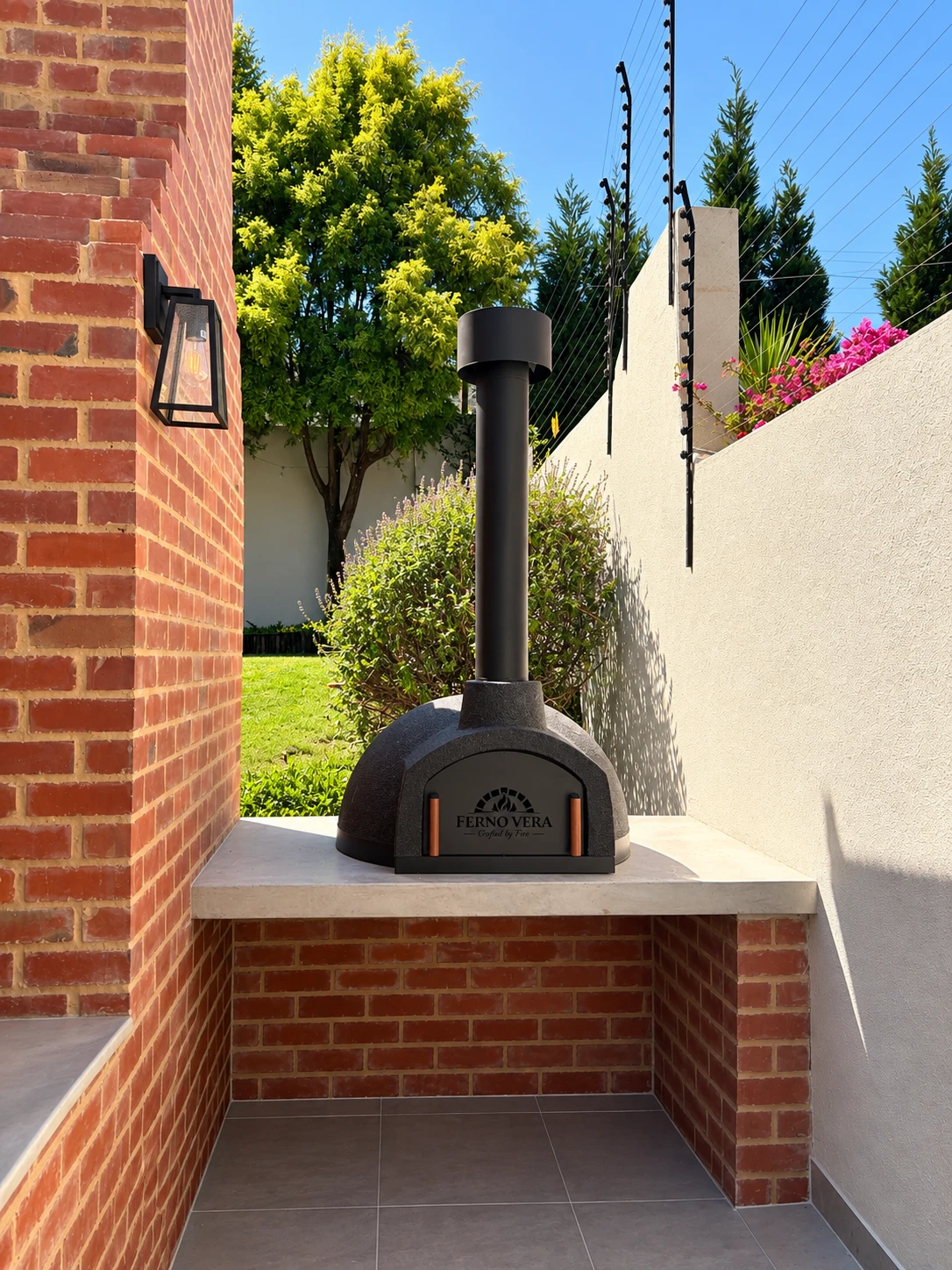
It's tempting to light a big fire and bake a pizza the day your new oven arrives. Please don't. A new refractory oven needs to be cured first, and skipping this step is the most common way to damage one.
Why a new oven must be cured
During manufacturing, moisture becomes trapped inside the cast refractory material. If you heat the oven quickly, that moisture turns to steam faster than it can escape, and the oven can crack badly. Curing drives the moisture out slowly, with small fires that grow a little each day.
Before you start
- Put the oven in its final position. It must be installed before curing, on a suitable non-combustible, insulated surface.
- Have a reliable temperature gauge. A Ferno Vera has a thermometer built in.
- Choose your fuel. Wood or gas may be used for curing. If you use wood, it must be dry and untreated.
- Keep a fire extinguisher nearby, and keep children and pets away.
The 5-day curing schedule
| Day | Target temperature | What to do |
|---|---|---|
| Day 1 | 60–80 °C | A small kindling fire only |
| Day 2 | 120–150 °C | Build the fire gradually |
| Day 3 | 180–200 °C | A little bigger, still gradual |
| Day 4 | 220–250 °C | Keep the heat rising slowly |
| Day 5 | 280–300 °C | The oven is ready for cooking |
Let the oven cool down naturally after every fire. Follow the schedule exactly, and don't go above each day's temperature.
Mistakes that can crack a new oven
- Rushing it. Doing the whole cure in a day or two.
- Overheating. Going past the day's target temperature.
- Shocking the oven. Lighting a sudden big fire, or adding too much wood at once.
- Cooling it fast. Never use water or forced air.
- Letting it get wet. Keep the oven protected from rain and standing water.
Skipping or rushing the cure also voids your warranty, so it's worth doing properly.
What about small cracks?
Small hairline cracks are normal in refractory ovens and don't affect performance. The dome and floor are deliberately not bonded together, so they can expand and contract as they heat and cool.
After the cure
From day 5 your oven is ready to cook. Start each fire small and build it gradually, allowing 1.5 to 2 hours to heat up. When the inside of the dome turns white and the thermometer reads 350–400 °C, it's pizza time. Find the full details in the Owner's Manual, and see our guide to the best wood for your oven.
Questions, answered
How long does it take to cure a pizza oven?
A Ferno Vera is cured over five days, starting at 60–80 °C on day one and reaching 280–300 °C on day five.
What happens if I don't cure my pizza oven?
Moisture trapped in the refractory turns to steam too quickly, which can crack the oven badly. Skipping or rushing curing also voids the warranty.
Can I use gas to cure the oven?
Yes. Wood or gas may be used for curing, as long as you follow the temperature schedule and never overheat the oven.
Can I cook during the curing process?
No. Wait until the five days are done. The oven is ready for cooking from day five.
Should the oven be installed before curing?
Yes. The oven must be in its final position before you begin.